


When it comes to looking after your vehicle, the importance of tyre maintenance cannot be overstated. Looking after your tyres starts with monitoring your tyre pressures. It’s an easy thing to do, and can really help your tyres last much longer.
All modern car tyres are air-filled, and should be routinely checked to ensure they are inflated to their optimal pressure levels. You can find your recommended tyre pressures on the tyre placard, usually located in the drivers’ door jamb, or in your owners manual.
Tyre pressure checks are not just recommended; they're a necessity for anyone looking to extend the life of their tyres, enhance fuel efficiency, and maintain a safe driving experience. Hence, it's vital for drivers to periodically check their tyre pressures.
Tyrepower recommends checking your tyre pressures at least once a fortnight. Tyre pressure can be easily checked at your local fuel station, or with a cheap gauge, readily available from most auto parts stores.
Tyre Pressure Monitoring Systems
Manually checking your tyre pressure, while effective, might not be the most convenient or reliable method for everyone. This is where Tyre Pressure Monitoring Systems (TPMS) come into play.
TPMS are systems designed to monitor the air pressure within your tyres continuously and alert you in real-time if any tyre falls below the manufacturer's recommended pressure level.
Types of TPMS
There are a few different types of TPMS: the simplest of which is a small computer that detects wheel rotation speeds and calculates if a tyre has pressure that is significantly different from the other tyres. This is the cheapest option, as no additional sensors are required and the system works regardless of whether you have factory wheels or not.
The next type is a sensor that goes inside your tyre, and is either attached to your tyre valve, or bonded to the inside of your wheel. These are highly accurate and sometimes have the capability to report pressure and temperature readings. The downside of this style sensor is the requirement to remove the tyre to access, replace or program the sensors.
Many aftermarket TPMS kits use a replacement tyre valve cap that contains a small battery and pressure sensor. These kits are great because they can be easily added to any vehicle, and easily swapped over, should you ever upgrade your wheels.
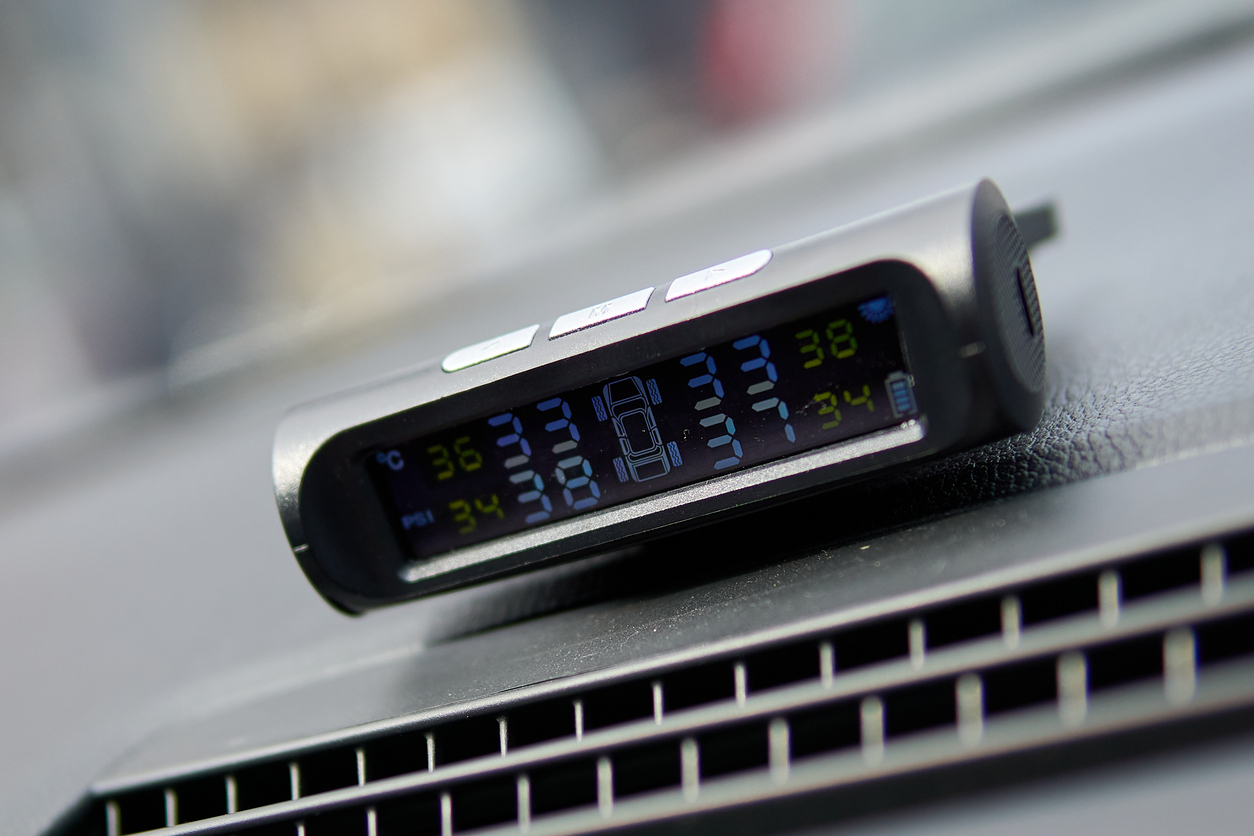
Factory-fitted TPMS are seamlessly integrated into your vehicle's systems, often offering drivers a hassle-free way to keep an eye on tyre pressure right on the dashboard cluster. On the other hand, aftermarket TPMS kits provide an easy solution for drivers whose vehicles did not come with a pre-installed system.
A great use for aftermarket TPMS kits is extending this crucial tyre monitoring capability to virtually any trailers and caravans. These kits are especially beneficial for long journeys where tyre pressure can significantly impact fuel consumption and safety.
Monitoring Tyre Pressures
Maintaining the correct tyre pressure is absolutely essential for safe and efficient driving. While checking tyre pressures can be done manually, with a TPMS, drivers now have a powerful tool at their disposal to monitor tyre health effortlessly.
Even TPMS should not replace regular tyre maintenance checks such as visual inspections, looking at how much tread you have remaining and more. If your TPMS light ever illuminates, it's a clear signal that one or more of your tyres needs attention.
Your local Tyrepower store can offer a free tyre check and expert advice, with Tyrepower being your go-to destination for all tyre-related needs. By reaching out to your local Tyrepower store, you ensure that your vehicle remains in top-notch condition, safeguarding your journey on the road ahead.